
Omnaris Nasal Spray for Allergies: Uses, Directions and Safety Information
A complete educational guide to OMNARIS, including Canadian label directions, safe preparation and use, precautions, interactions, side effects, and when to seek help.
OMNARIS is a prescription nasal spray used in Canada to help relieve symptoms of certain allergies. This article explains what OMNARIS contains, who it is intended for, how it is generally used, and which precautions are important to discuss with a physician or pharmacist.
This is general education only. It is not personal medical advice, a diagnosis, or a substitute for professional guidance.
What OMNARIS is
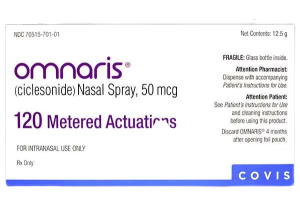
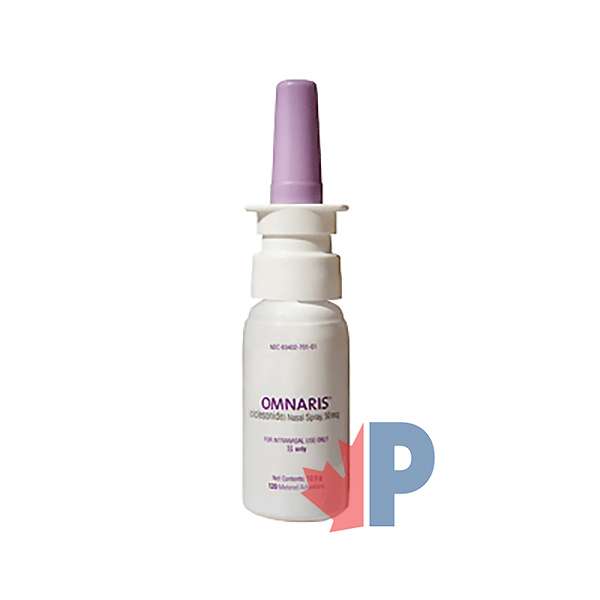
OMNARIS contains ciclesonide, an intranasal corticosteroid. Each metered spray delivers 50 micrograms (mcg) of ciclesonide. The Canadian product has DIN 02303671 and is supplied in a bottle containing 120 metered sprays. The product label identifies Covis Pharma Canada Ltd. as the distributor.
OMNARIS is indicated in Canada for:
- Seasonal allergic rhinitis, including hay fever
- Perennial allergic rhinitis, meaning year-round nasal allergies
- Adults and adolescents 12 years of age and older
Allergic rhinitis can cause nasal congestion, a runny nose, itching, and repeated sneezing. These symptoms may occur after exposure to pollen, dust mites, mould, animal dander, or other allergens.
OMNARIS helps relieve these symptoms by reducing inflammation in the nasal passages. It does not remove the underlying allergy, and it does not cure allergies.
How OMNARIS works
Ciclesonide is a corticosteroid that acts mainly in the nasal passages to reduce allergic inflammation. As inflammation settles, symptoms such as stuffiness, runny nose, itching, and sneezing may become less troublesome.
OMNARIS is not a decongestant. Its effects are not immediate in the same way that some fast-acting nasal products may feel. It may take several days for improvement to become noticeable, and the timing can vary from person to person.
Regular use is important because the medicine works through continued control of inflammation. Using extra sprays is not a safe way to obtain faster relief. The goal is to follow the schedule prescribed by the healthcare professional.
Who it is for
The Canadian product monograph indicates OMNARIS for adults and adolescents 12 years and older with seasonal or perennial allergic rhinitis.
It is not presently approved in Canada for children younger than 12. A healthcare professional should assess ongoing or severe nasal symptoms, especially when the cause is uncertain. Congestion, discharge, facial pain, fever, or nosebleeds may sometimes be related to infection or another condition rather than allergy alone.
General label directions
The Canadian monograph gives the following usual dosing information for adults and adolescents 12 years of age and older:
- 2 sprays in each nostril once daily
- Each spray delivers 50 mcg of ciclesonide
- Total daily dose: 200 mcg per day
- Maximum total daily dose: 2 sprays in each nostril, or 200 mcg per day
These are general label directions, not an individual treatment recommendation. The instructions from a person’s own prescriber or pharmacist take priority. They may be different depending on medical history, other medicines, previous treatment, or the healthcare professional’s assessment.
OMNARIS should be used regularly as directed. If a dose is missed, the next dose should be taken when it is due. Do not double the dose or exceed the prescribed daily amount.
Preparing and using the spray
The product monograph includes specific preparation and administration instructions. Important points include:
- Shake the bottle gently before use.
- Before the first use, prime the pump by pressing it 8 times.
- If the spray has not been used for 4 or more consecutive days, gently shake it and re-prime with 1 spray or until a fine mist appears.
- Gently clear the nostrils if needed.
- Keep the bottle upright and use the product in the nose only.
- Place the spray tip into one nostril while closing the other nostril with a finger.
- Tilt the head slightly forward and breathe in gently through the nose while pressing the pump.
- Avoid spraying into the eyes.
- Avoid spraying directly onto the nasal septum, the wall between the nostrils.
- Repeat the process in the other nostril according to the prescribed dose.
A pharmacist can demonstrate the technique if the instructions are difficult to follow. Proper positioning can help deliver the medicine to the nasal passages and may reduce unnecessary irritation.
Cleaning and caring for the applicator
After daily use, wipe the applicator tip with a clean tissue and replace the cap.
The applicator should be cleaned weekly with warm water. After cleaning, allow it to dry as directed, replace the applicator, and prime the unit with one spray or until a fine mist appears.
Do not try to unblock the spray hole with a pin or another sharp object. A sharp object may damage the applicator and affect the dose or spray pattern.
Precautions before use
OMNARIS should not be used by someone with a known allergy to ciclesonide or any of its ingredients.
Before using it, speak with a physician or pharmacist if there is:
- An untreated infection in the nose
- A recent nasal operation or injury
- Sores or ulcers inside the nose
- A history of tuberculosis
- A fungal, bacterial, or viral infection
- Ocular herpes simplex, which is herpes infection involving the eye
- A weakened immune system or use of immune-suppressing medicines
- Use of other oral or inhaled corticosteroids
- Pregnancy, plans to become pregnant, or breastfeeding
Corticosteroids may affect wound healing and immune responses. These precautions do not automatically mean that treatment is unsuitable, but they do mean that the decision should be made with appropriate clinical guidance.
People who use an intranasal corticosteroid for several months or longer may need periodic examination of the nasal mucosa. This allows a healthcare professional to look for ongoing irritation, infection, or other changes.
Medicines and interactions
Tell the physician or pharmacist about all medicines being taken, including prescription medicines, non-prescription products, and supplements.
Particular caution is advised with medicines such as:
- Ketoconazole
- Itraconazole
- Ritonavir
- Nelfinavir
These medicines can affect enzymes involved in corticosteroid metabolism. The Canadian monograph explains that clinically significant interactions are generally unlikely at usual intranasal exposure, but potent inhibitors of the CYP3A4 system may require careful consideration.
People who use other oral or inhaled steroids should also discuss their complete treatment plan with a healthcare professional. Do not stop oral corticosteroids suddenly unless instructed to do so.
Possible side effects
Like other medicines, OMNARIS may cause side effects. Effects reported in the Canadian product monograph include:
- Headache
- Nosebleeds
- Nasal irritation or discomfort
- Nasal dryness
- Sore throat or throat irritation
- Nasal ulcers
- Nausea
- Dry mouth
- Altered or decreased taste
Nosebleeds and irritation may occur because the medicine is applied to the nasal lining. Persistent or troublesome effects should be discussed with a physician or pharmacist. Do not change the dose or stop prescribed treatment without professional advice.
Corticosteroid nasal sprays can rarely be associated with nasal septal perforation, meaning an opening in the wall between the nostrils. Ongoing nasal pain, crusting, sores, repeated bleeding, or a whistling sound while breathing should be assessed by a healthcare professional.
Rarely, intranasal corticosteroids may also be associated with infections, wheezing, cataracts, glaucoma, or increased pressure in the eye. These effects are not expected for everyone and should be considered in the context of the prescribed dose, duration of treatment, and a person’s medical history.
When to seek emergency help
Severe allergic reactions require immediate medical attention. Seek emergency help for symptoms such as:
- Rash or hives
- Swelling of the face, lips, tongue, or throat
- Trouble swallowing
- Trouble breathing
Persistent or concerning symptoms, including severe nosebleeds, nasal sores, worsening nasal pain, or signs of infection, should be discussed promptly with a healthcare professional.
Storage and disposal
Store OMNARIS at 15–30°C. Do not freeze it. Keep it out of the reach and sight of children.
The 120-spray bottle should be discarded after 120 sprays following initial priming, because the amount of ciclesonide delivered may become substantially less than the labelled dose afterward.
The bottle should also be discarded 4 months after removal from the foil pouch, whichever comes first. Recording the date the pouch was opened can help track this limit.
Questions to ask a pharmacist
A pharmacist can help clarify:
- Whether the prescribed dose and timing are clear
- How to aim the spray away from the nasal septum
- When the pump needs to be primed or re-primed
- How to clean the applicator
- Whether other medicines may interact with ciclesonide
- What to do if nosebleeds or irritation occur
- When the bottle should be discarded
- Whether symptoms may indicate infection or another condition
Careful technique and regular use can support allergy symptom relief, but treatment decisions should remain connected to professional assessment.
Medical disclaimer
OMNARIS is a prescription medicine in Canada. This article is for general educational purposes and does not recommend OMNARIS for any particular person. It does not replace a physician’s diagnosis, a pharmacist’s advice, the official consumer information, or the complete product monograph.
Follow the instructions provided by your own prescriber or pharmacist. Speak with a healthcare professional before starting, stopping, or changing treatment.